
According to the American Pet Products Association's National Pet Owners Survey, 2023/2024, first-time cat buyers spend more time researching breeds before purchasing than at any previous point in recorded survey history – a reflection of how seriously people take the decision to bring a specific cat into their home.
If you have narrowed the field to a Munchkin or Maine Coon, you are looking at two breeds that could not be more different on the surface. One is compact, low-slung, and endlessly playful. The other is one of the largest domestic cats in existence, built like a small wildcat and draped in a luxurious coat. The personalities, care demands, and long-term commitments diverge just as significantly as the physical profiles.
This comparison covers everything that actually matters in the decision: temperament, grooming reality, health risks, family compatibility, lifestyle fit, and cost – with enough specificity to give you a genuine answer rather than a vague "it depends."
What Are the Key Differences Between Munchkin Cats and Maine Coons?
The Munchkin and the Maine Coon represent opposite ends of the domestic cat size and structural spectrum. The Munchkin is defined by its naturally occurring gene mutation that shortens the long bones of the legs, producing a medium-bodied cat that sits close to the ground. TICA formally recognized the Munchkin in 1994 and maintains an open breed standard that accommodates both short-haired and long-haired coat types.
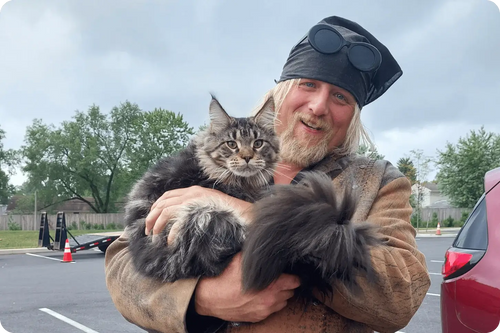
The Maine Coon, by contrast, is one of North America's oldest natural breeds – developed over generations in the cold Northeast and recognized by both TICA and the CFA. It is the largest domestic cat breed, routinely reaching 18 to 25 pounds in males, with a dense semi-longhair coat, distinctive tufted ears, and a personality that owners consistently describe as dog-like in its loyalty and social engagement.
Where the Munchkin is a cat defined by a single physical trait layered onto an otherwise average-sized body, the Maine Coon is a cat defined by exceptional scale in size, coat, and personality. The question of Munchkin or Maine Coon, then, is less about which cat is better and more about which cat matches the specific shape of your household.

Maine Coon vs Munchkin: Size, Personality, and Appearance
How Different Are They, Really?
The size gap is significant and practical. A female Munchkin typically matures at 4 to 8 pounds; a male Maine Coon routinely reaches 18 to 25 pounds. That is not just a visual difference – it affects food quantities, litter box size, furniture needs, and the physical experience of the cat in your home.
|
Trait
|
Munchkin
|
Maine Coon
|
|
Adult weight
|
4–9 lbs
|
10–25 lbs
|
|
Leg length
|
Short (3 inches below average)
|
Long, proportionate
|
|
Coat type
|
Short or semi-long, low-maintenance
|
Semi-longhair, dense, high-maintenance
|
|
Jumping ability
|
Limited vertical range
|
Strong jumper and climber
|
|
Body build
|
Compact, sturdy, low-to-ground
|
Large, muscular, rectangular
|
|
Personality type
|
Playful, social, interactive
|
Friendly, loyal, moderately independent
|
|
Vocalization
|
Moderate
|
Moderate, with chirping tendency
|
|
TICA recognition
|
Yes (1994)
|
Yes (long-established)
|
The personality difference is real but often overstated. Both breeds are affectionate and good with people. The Munchkin tends to be more consistently interactive – always present, always curious, always looking for engagement. The Maine Coon brings a quieter confidence: deeply attached to its family but capable of entertaining itself, and often described as the cat that acts like a dog without being clingy about it.
How Do Grooming Needs Compare Between Munchkin and Maine Coon Cats?
Grooming is where the practical gap between these two breeds becomes most visible for owners.
A short-haired Munchkin needs weekly brushing, monthly nail trims, and routine ear checks – perhaps 15 minutes per week in total. A long-haired Munchkin adds brushing two to three times per week, with extra attention to areas prone to matting behind the ears and along the hindquarters.
A Maine Coon is a different category of grooming commitment. Its dense, layered semi-longhair coat sheds year-round and seasonally blows out in spring. Without regular maintenance, matting develops – particularly under the arms and along the belly. Professional grooming every 6 to 8 weeks is worth considering for Maine Coon owners who prefer not to manage the coat themselves.
Grooming essentials for each breed:
Munchkin (short-haired):
-
Brush once weekly with a slicker brush or rubber grooming mitt
-
Check ears every two weeks for wax buildup or debris
-
Trim nails every 3 to 4 weeks
-
Annual dental cleaning; daily brushing if tolerated
Maine Coon:
-
Brush two to three times weekly with a wide-tooth comb and slicker brush – work section by section to reach the undercoat
-
Check and gently detangle the belly and underarm areas weekly, where matting begins
-
Trim the fur between the toe pads monthly to prevent debris buildup
-
Schedule professional grooming every 6 to 8 weeks for coat health and sanity
-
Annual dental cleaning; ear checks every two weeks
Time investment per week: roughly 15 minutes for a short-haired Munchkin versus 45 to 60 minutes for a Maine Coon. That difference compounds across a 12 to 15-year lifespan.
Which Breed Is Better for Families and Children?
Both breeds have strong reputations for family compatibility, but they express it differently.
Munchkins are energetic, immediately engaging cats that match children's play energy well. They initiate interaction, respond quickly to movement, and enjoy chase and wand toy games that children naturally gravitate toward. Their smaller size means a child's rougher handling carries more physical risk – supervision matters more with a Munchkin than with a larger cat.
Maine Coons are famously described as "gentle giants" – patient, tolerant, and physically durable enough to absorb the attention of enthusiastic children without becoming stressed. They are more likely to engage on their own terms but rarely withdraw completely from family activity. Multiple owner surveys and breed temperament assessments consistently rank Maine Coons among the highest for child and multi-pet tolerance, a finding aligned with the breed's working-cat origins, where adaptability was essential.
Both breeds integrate well with dogs and other cats when introductions are managed gradually. The Maine Coon's size means it holds its own in multi-pet households without difficulty; the Munchkin's smaller frame means monitoring early inter-pet dynamics more carefully.
Health and Lifespan: What You Need to Know
Munchkin Cat Health
Munchkin cat health issues stem primarily from a skeletal gene mutation, which predisposes to lordosis (inward spinal curvature), pectus excavatum (chest deformity), and osteoarthritis driven by abnormal joint mechanics. These conditions vary from asymptomatic to clinically significant, depending heavily on breeding quality. A Munchkin from health-tested parents, bred according to TICA standards, carries a meaningfully lower risk profile than one from an unvetted source.
Average lifespan: 12 to 15 years with proper care.
Maine Coon Health
The Maine Coon carries a well-documented predisposition to hypertrophic cardiomyopathy (HCM), the most common cardiac disease in cats. According to research published in the journal of Veterinary Internal Medicine and reviewed by the UC Davis Veterinary Genetics Laboratory, a breed-specific MYBPC3 mutation has been identified almost exclusively in Maine Coons; studies estimate HCM prevalence in the breed at between 9.5% and 26.3%, depending on the population studied. Responsible breeders screen breeding cats for this mutation – ask for documentation. Hip dysplasia is an additional consideration, particularly in larger males.
Average lifespan: 12 to 16 years, with well-managed cats regularly reaching the upper range.
|
Health Factor
|
Munchkin
|
Maine Coon
|
|
Primary concern
|
Skeletal: lordosis, arthritis
|
Cardiac: HCM
|
|
Secondary concerns
|
Pectus excavatum, obesity
|
Hip dysplasia, spinal muscular atrophy
|
|
Genetic testing available
|
Limited
|
Yes: MYBPC3 mutation test
|
|
Breeding quality impact
|
High
|
High
|
|
Avg. lifespan
|
12–15 years
|
12–16 years
|
Which Breed Is Better for Your Lifestyle?
The honest answer depends on three practical factors: living space, time for grooming, and what kind of cat energy you want in your home.
The Munchkin fits best if:
-
You live in an apartment or smaller home where high vertical space is limited
-
You want a consistently interactive, present cat that initiates play daily
-
Grooming time is limited, and you prefer low-maintenance coat care
-
You have younger children who benefit from an energetic, engaging companion
A realistic Munchkin day: wakes up alongside the owner, follows them through the morning routine, plays actively in two or three short sessions, and settles into a lap during quiet hours. Minimal grooming. Constant company.
The Maine Coon fits best if:
-
You have more space – a larger home where the cat can roam, climb, and establish territory
-
You enjoy the ritual of grooming and see it as bonding time rather than an obligation
-
You want a cat that is deeply loyal but not demanding, capable of self-directed activity
-
You have older children or other pets that benefit from a larger, calmer presence
A realistic Maine Coon day: patrols the home in the morning, settles near (not necessarily on) the owner during work hours, engages enthusiastically in play when invited, and ends the day in close but not suffocating proximity.
Munchkin vs. Maine Coon: Cost Considerations
The cost picture differs both at purchase and over the lifetime of ownership.
|
Cost Category
|
Munchkin
|
Maine Coon
|
|
Kitten from reputable breeder
|
$1,000 – $3,500
|
$2,500 – $5,000
|
|
Initial vet setup (vaccines, neuter/spay)
|
$350 – $800
|
$400 – $900
|
|
Monthly food
|
$30 – $60
|
$50 – $100 (larger portions)
|
|
Monthly grooming (if professional)
|
$0 – $30 (occasional)
|
$50 – $100 (regular)
|
|
Annual vet care (healthy adult)
|
$200 – $400
|
$300 – $600
|
|
Pet insurance (monthly)
|
$25 – $60
|
$35 – $75
|
|
Estimated annual ongoing cost
|
$1,200 – $2,000
|
$1,500 – $3,100
|
Maine Coons cost more across nearly every category: higher purchase price, reflecting demand and breeding investment; higher food costs due to their size; and higher grooming costs if professional help is used. Both breeds benefit from pet insurance, given their respective health predispositions – a Munchkin's potential joint and spinal issues and a Maine Coon's cardiac risk make unexpected veterinary expenses a realistic planning factor.
How to Choose Between a Munchkin or Maine Coon: Key Takeaways
Work through these questions honestly before deciding:
-
How much space do you have? Munchkins adapt well to apartments; Maine Coons need more room to move, climb, and establish territory.
-
How much grooming time can you commit to weekly? If the answer is under 20 minutes, a short-haired Munchkin is the realistic choice.
-
Do you want constant engagement or companionable independence? Munchkins initiate; Maine Coons respond.
-
What is your budget – both upfront and annually? Maine Coons carry higher costs at every stage.
-
Are there young children in the home? Both work, but Maine Coons tolerate rougher handling more gracefully due to their size.
-
Are you prepared for breed-specific health monitoring? Munchkins need joint and spinal monitoring; Maine Coons need cardiac screening from age 3 onward.
-
How important is grooming as a bonding activity? If it sounds like a pleasure rather than a chore, the Maine Coon coat rewards that investment.
Neither breed is the wrong choice for a committed, informed owner. The difference is that one cat will challenge your space and grooming schedule while rewarding you with exceptional presence, and the other will fit neatly into almost any home while delivering playful, affectionate company with minimal upkeep.
If you are ready to find a well-bred Munchkin kitten from a health-tested, responsible breeder with a full health guarantee, browse available Munchkins and connect with an adoption specialist who can help you choose the right fit for your household.
Frequently Asked Questions
Which breed is better for a first-time cat owner – a Maine Coon or Munchkin?
Both are manageable for first-time owners, but the Munchkin has a slight edge in simplicity: lower grooming demands, smaller food quantities, and a more compact home footprint. The Maine Coon rewards owners willing to invest in coat care and can handle the learning curve of first-time ownership gracefully, but the grooming commitment should not be underestimated before choosing one.
Do Munchkin cats and Maine Coons get along well with other pets?
Yes, both breeds are consistently rated among the higher end for multi-pet compatibility. Maine Coons tend to hold their own physically in multi-pet households due to their size, while Munchkins integrate well through their social temperament. Gradual introductions over 7 to 10 days – separated initially, then in supervised contact – produce the best outcomes for both breeds.
How do the grooming needs of a Munchkin compare to those of a Maine Coon?
The difference between a Munchkin cat vs Maine Coon here is substantial. A short-haired Munchkin requires roughly 15 minutes of weekly brushing and basic maintenance. A Maine Coon requires 45 to 60 minutes per week of active coat management, with professional grooming every 6 to 8 weeks recommended to prevent matting in the dense undercoat. Long-haired Munchkins fall somewhere between the two, but still well below the Maine Coon's demands.
Are Munchkin cats or Maine Coons more active and playful?
Munchkins are consistently more initiating in their play – they seek out interaction, start games, and remain in an energetically "kitten-like" state throughout their adult lives. Maine Coons are enthusiastic players when engaged, but are equally capable of self-directed activity and rest. For households that want a cat that keeps energy levels consistently high, the Munchkin is the better match.
How much do Munchkin cats and Maine Coons cost on average?
From reputable breeders, Munchkin kittens typically range from $1,000 to $3,500 and Maine Coon kittens from $2,500 to $5,000, with show-quality individuals of either breed exceeding those ranges. Ongoing annual costs run approximately $1,200 to $2,000 for a healthy Munchkin and $1,500 to $3,100 for a Maine Coon, with the difference driven primarily by food volume, grooming, and size-related veterinary costs.









Comments(0)