
Persian cats are famous not only for their long, flowing coats and distinctive flat faces, but also for the extraordinary range of colors and patterns they can display. Few breeds offer such visual diversity, with coats ranging from deep, dramatic solids to soft pastel shades and intricate pattern combinations. This wide spectrum is not accidental — it is the result of centuries of selective breeding and complex genetic interactions.
How many Persian cat colors exist, and what do they actually represent beyond simple appearance? Coat color in Persians is tied not only to aesthetics, but also to genetics, grooming effort, and how a cat’s appearance changes over time. Understanding these layers allows owners to appreciate the breed more fully and make informed choices that balance beauty with practicality.
How Persian Cat Colors Are Classified
Persian cat colors are typically classified into three primary groups: solid, shaded, and patterned. This system helps organize what would otherwise be an overwhelming variety of visual presentations. Classification is based on how pigment is distributed along each hair shaft and how that pigment appears across the coat as a whole.
Solid Persians have uniform color from root to tip, creating a consistent, uninterrupted appearance. Shaded Persians display lighter roots with darker tips, producing a soft gradient effect that changes with movement and light. Patterned Persians include varieties such as tabby, smoke, and colorpoint, where markings or contrast play a defining role.
These categories are not merely descriptive — they influence how coats age, how grooming imperfections appear, and how color intensity shifts seasonally. Understanding classification provides a foundation for interpreting the many colors of Persian cats in a structured, meaningful way.
Popular Solid Persian Cat Colors
Black, Blue, and White
The Persian cat black color is among the most striking and dramatic of all Persian coats. When properly groomed, it appears glossy and uniform, reflecting light with a mirror-like finish. However, black coats also show dust, loose hair, and dandruff more readily, making consistent grooming essential for maintaining visual depth.
Blue Persians, often mistaken for gray, display a cool slate tone that softens the breed’s appearance. This color tends to disguise minor grooming inconsistencies better than black, but still benefits from regular brushing to maintain even texture.
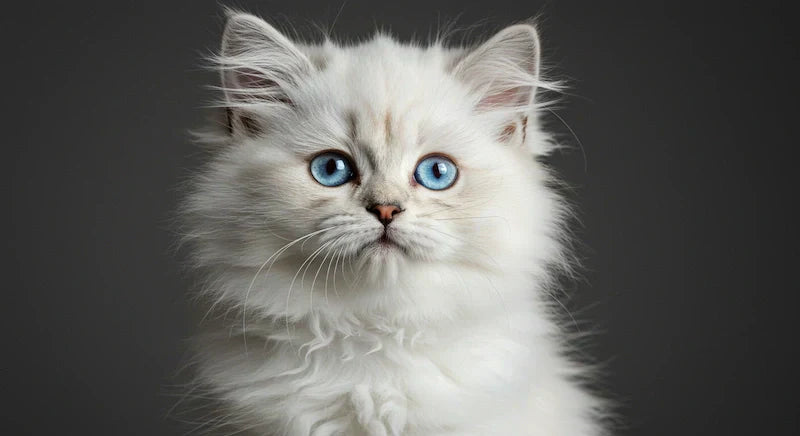
White Persians are visually stunning yet demanding. Their coats reveal tear staining, saliva marks, and environmental debris almost immediately, requiring daily facial care to preserve their pristine appearance.
Together, these colors represent some of the most iconic and recognizable Persian varieties.
Cream and Red
The Persian cat cream color offers a warm, pale alternative to white, with a softer visual effect that is more forgiving in daily maintenance. Cream coats tend to mask minor staining and uneven grooming, making them appealing to owners who want elegance with slightly less visible upkeep.
Red Persians, often called orange, exhibit vibrant warmth and richness. Even when genetically classified as solid, subtle tabby striping is common due to underlying pigment patterns. These markings add depth and movement to the coat rather than detracting from uniformity.
Both cream and red Persians are popular for their approachable appearance and balanced blend of beauty and manageability.
Chocolate and Lilac
The Persian cat chocolate color is a deep, warm brown with rich undertones that appear luxurious under good lighting. Lilac, a diluted form of chocolate, presents as a pale lavender-gray with pinkish hues, creating a soft, refined look.
These colors are significantly rarer because they rely on recessive genetic combinations. Their lighter tones emphasize coat texture and symmetry, which means grooming quality is especially noticeable. Owners drawn to these shades often value their exclusivity and subtle elegance.
Patterned and Shaded Persian Colors
Beyond solid coats, Persian cats also appear in an extensive range of patterned and shaded varieties. Smoke Persians have pale roots with dark tips, creating dramatic contrast that becomes most visible when the cat moves or parts its fur. This effect adds depth and dimension but also highlights uneven grooming if maintenance lapses.
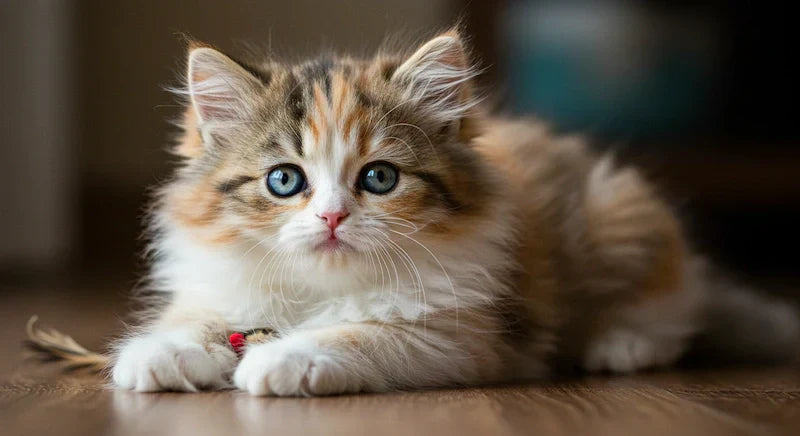
Tabby Persians display classic striping, swirls, or spotted patterns layered over a base color. These markings give the coat visual complexity and often evolve as the cat matures.
Colorpoint Persians feature darker pigmentation on the face, ears, legs, and tail, contrasted against a lighter body. This pattern is temperature-sensitive, meaning color intensity can shift with climate and age.
Patterned coats draw attention to movement and texture, making grooming consistency especially important.
How Coat Color Affects Grooming
Coat color plays a practical role in grooming that extends far beyond aesthetics. Light-colored Persians show tear staining, saliva residue, and environmental debris more clearly, increasing the need for daily facial cleaning. Dark coats, while better at hiding stains, reveal loose hair and dandruff more easily.
Sun exposure also affects color longevity. Black and chocolate Persians may experience fading over time, while lighter colors can yellow if coat care is inconsistent. Grooming routines must therefore adapt not only to coat length, but also to color-specific challenges.
Owners often discover that grooming effort feels different depending on coat color, even when texture and length are identical.
Color Genetics and Breeding Basics
Persian cat colors are the result of complex genetic interactions involving dominant, recessive, and dilution genes. Some colors, such as black and red, appear more frequently because they are genetically dominant. Others, including chocolate and lilac, require specific gene combinations from both parents, which limits their occurrence.
Genetics also explains why kittens may change color intensity as they mature, why patterns may become more or less visible over time, and why predicting litter colors is not always straightforward. Seasonal coat changes and hormonal shifts can further influence appearance.
In practice, coat color is often one of the most visible outcomes of breeding decisions, which is why availability varies across different Persian lines. Browsing real-world examples of Persian kittens often highlights just how broad this spectrum can be when genetics, grooming, and age intersect — something that becomes evident when viewing listings organized around Persian cat colors rather than personality or age alone.
Conclusion
Persian cat colors reflect far more than surface beauty. They are shaped by genetics, influence grooming routines, and determine how a coat ages and presents itself over time. From bold solids to intricate patterns, each color carries its own visual character and practical considerations.
Choosing a Persian cat color is ultimately about aligning aesthetic preference with realistic maintenance expectations. When beauty and care requirements are thoughtfully balanced, the result is a coat that remains striking, healthy, and rewarding throughout the cat’s life.




























Comments(0)