
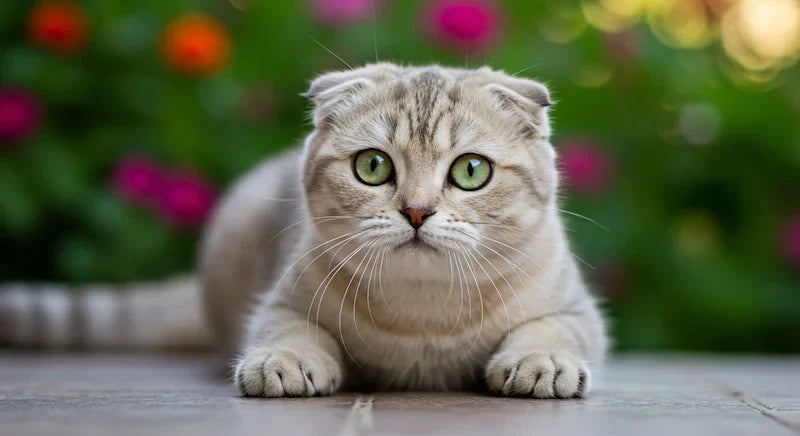
Scottish Folds are instantly recognizable thanks to their folded ears, round faces, and soft, expressive features that give them a uniquely gentle appearance. This visual charm has made the breed extremely popular worldwide, often drawing attention before prospective owners fully understand the implications behind the look. Unlike many purely aesthetic traits in cats, the folded ears of Scottish Folds are the visible result of a deeper genetic mutation that affects cartilage throughout the body.
This connection between appearance and physiology is why questions about longevity are especially important for this breed. How long do Scottish Fold cats live compared to other cats is not a question answered by averages alone. Lifespan in Scottish Folds is shaped by genetics, daily care decisions, and how well owners recognize and manage breed-specific health risks over time. Understanding these factors early helps set realistic expectations and supports better quality of life throughout all stages of aging.
Average Life Expectancy of Scottish Fold Cats
When people ask how long do Scottish Folds live, they are typically looking for a realistic, experience-based range rather than an idealized number. On average, Scottish Fold cats live between 11 and 15 years. Some individuals exceed this range and enjoy relatively long lives, while others experience a shortened lifespan due to complications related to their genetic makeup.
Lifestyle choices play a significant role in determining where a cat falls within this range. Indoor Scottish Folds tend to live longer than those with outdoor access because they are less exposed to injuries, infectious diseases, parasites, and unpredictable environmental stressors. Since the breed may already face physical challenges related to joint health, minimizing external risks becomes even more important.
Owners often find that longevity improves when Scottish Folds live in calm, predictable environments with controlled activity. Consistency in routine, diet, and veterinary care has a greater impact on this breed than on many others, making thoughtful daily management a key factor in lifespan.
Factors most strongly influencing life expectancy include:
-
Indoor versus outdoor lifestyle choices
-
Early and consistent veterinary monitoring
-
Long-term weight and mobility management
Together, these elements often determine whether a Scottish Fold reaches senior years comfortably or encounters health challenges earlier in life.
Genetic Traits That Affect Longevity
The defining feature of the Scottish Fold — its folded ears — results from a mutation affecting cartilage formation. While the ears are the most visible expression of this mutation, cartilage exists throughout the body, including in joints, the tail, and connective tissues. As a result, the mutation has systemic effects rather than remaining isolated to appearance.
Over time, altered cartilage structure can lead to stiffness, reduced flexibility, and progressive discomfort. These changes often develop slowly, making them difficult to detect in early stages without close observation. Some cats show mild effects, while others experience more pronounced mobility limitations, depending on genetic inheritance and overall health management.
Because this mutation cannot be removed from the breed, lifespan depends heavily on how effectively its consequences are managed. Longevity is less about avoiding problems entirely and more about minimizing discomfort, slowing progression, and supporting physical function as the cat ages.
Common Health Issues That Influence Lifespan
Skeletal and Joint Concerns
Skeletal and joint issues are among the most significant health challenges influencing Scottish Fold life expectancy. Abnormal cartilage development can cause thickening around joints, reduced range of motion, and structural changes that affect how the cat moves. These issues commonly involve the tail, hips, and limbs.
Early signs are often subtle, such as stiffness after rest or reluctance to jump. Without routine monitoring, these symptoms may go unnoticed until discomfort becomes more advanced.
Pain Management and Mobility
Pain in Scottish Folds is frequently under-expressed. Rather than vocalizing, cats may simply become less active, avoid certain movements, or withdraw from play. Over time, unmanaged discomfort can lead to muscle loss, weight gain, and reduced overall resilience, indirectly shortening lifespan.
Supporting mobility focuses on comfort and function rather than pushing activity. Gentle movement, supportive environments, and veterinary-guided pain management all contribute to maintaining quality of life.
Early Detection Importance
Early detection allows for intervention before joint changes become severe. Observing movement patterns, posture, and tolerance for activity provides valuable insight into underlying discomfort.
Effective long-term management often includes:
-
Regular mobility and posture assessments
-
Environmental adjustments to reduce physical strain
-
Ongoing veterinary evaluation and guidance
These measures help slow disease progression and preserve independence for as long as possible.
Daily Care Habits That Support Longevity
Everyday routines have a direct and cumulative impact on Scottish Fold lifespan. Weight management is especially critical, as excess body weight increases pressure on joints that are already structurally vulnerable. Even modest weight gain can significantly worsen discomfort and limit mobility.
Balancing activity is equally important. Too little movement leads to muscle weakness, while excessive or high-impact activity can accelerate joint wear. Controlled, low-impact play supports circulation, muscle tone, and mental engagement without overloading the body.
Owners who focus on daily care typically prioritize:
-
Maintaining a lean, stable body condition
-
Encouraging gentle, regular movement
-
Adjusting home layouts to minimize jumping and strain
These habits contribute steadily to comfort and long-term health.
Nutrition and Veterinary Monitoring
Nutrition supports longevity by influencing inflammation, weight stability, and overall physical resilience. Diets that emphasize high-quality protein, controlled calories, and appropriate nutrient balance help maintain muscle without adding unnecessary joint stress.
Regular veterinary monitoring becomes increasingly important as Scottish Folds age. Routine checkups allow subtle changes in mobility or posture to be identified early, making management more effective and less invasive.
For readers researching how long do Scottish Fold cats live, understanding the ongoing role of nutrition and veterinary care provides essential context for realistic lifespan expectations.
Conclusion
Scottish Fold lifespan is shaped far more by genetics and daily care than by chance alone. While average life expectancy typically falls between 11 and 15 years, individual outcomes vary widely depending on how joint health, weight, and comfort are supported throughout life.
Informed ownership plays a decisive role in both longevity and quality of life. When genetic realities are acknowledged and managed with thoughtful care, Scottish Folds can enjoy stable, comfortable lives that extend well into their senior years, despite the challenges associated with their unique appearance.


























Comments(0)